The “SWANA Urban Political Network” Launches its First Winter Institute in Beirut
17.02.2026
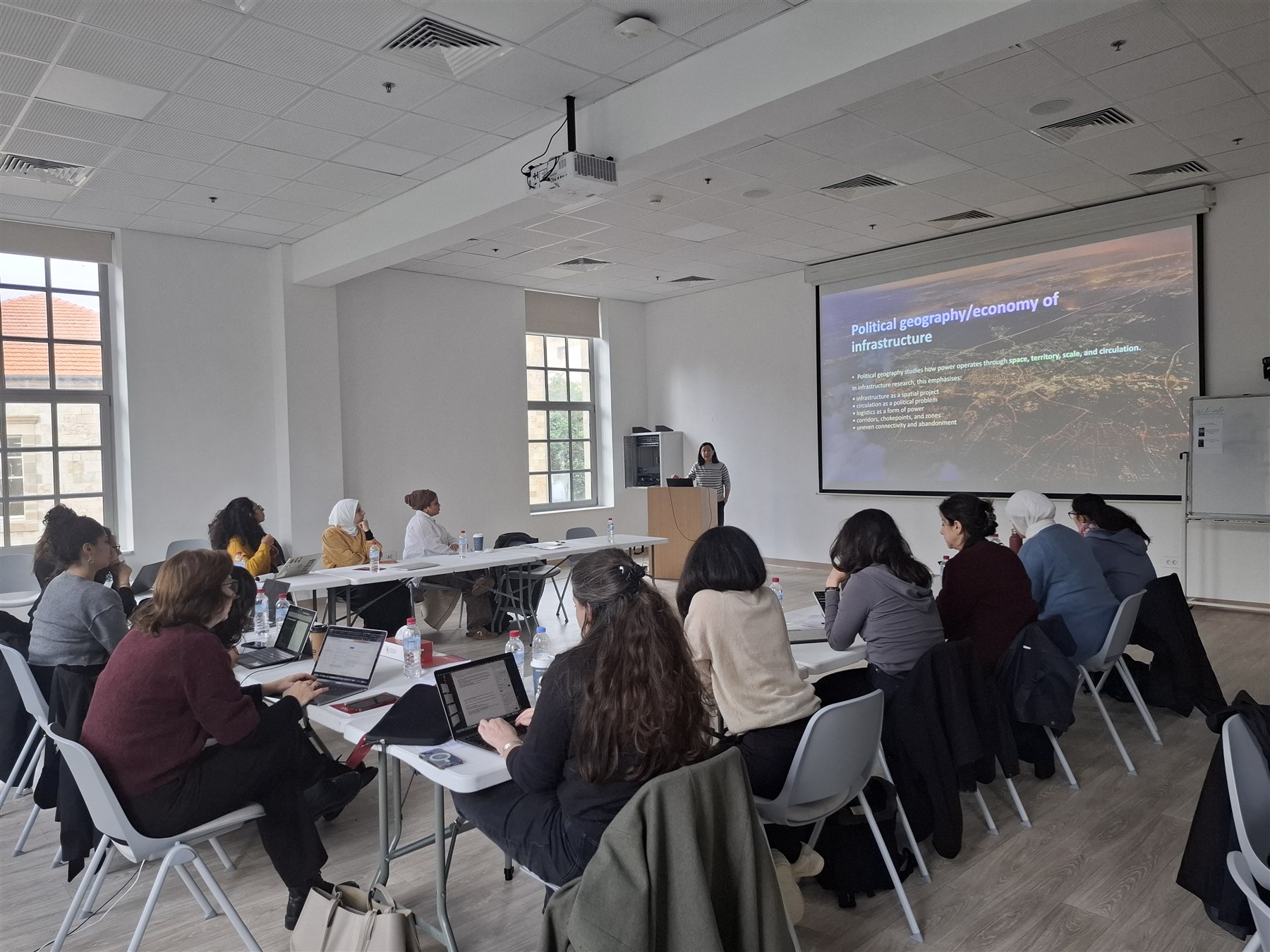
Between January 12 and 15, 2026, the American University of Beirut hosted the first Winter Institute organized by the newly launched SWANA Urban Political Network (UPN). Co-founded in summer 2024, UPN is coordinated by five scholars: Sarah El-Kazaz (SOAS), Mona Harb (AUB), Azadeh Mashayekhi (UCL), Noura Wahby (AUC/Cambridge) and Rafeef Ziadah (KCL). The Network brings together more than 80 scholars from, and working on, cities and localities across the SWANA region (South West Asia and North Africa). UPN is hosted by the Beirut Urban Lab at AUB.
×
×

×
UPN is dedicated to building an interdisciplinary research community for critical studies of urbanism and its ecologies in the SWANA region, creatingspaces of mentorship for early career scholars from and of the region, and fostering the public dissemination of academic work beyond traditional publishing venues.
Entitled “Urban, Ecological and Infrastructural Politics in SWANA,” the first UPN Winter Institute brought together eleven scholars, selected through a competitive call for abstracts that received 108 applications—an indication of the strong demand for such training spaces in the region. Selection prioritized candidates from SWANA and focused on early career scholars in the final stages of their PhD or in postdoctoral positions. The UPN team led academic sessions on theorizing urbanism; political economy from the city; infrastructure, power and everyday life; urban governance and informality; and methodologies for urban research. Participants worked on developing a piece of writing of their choice, which was discussed in smaller group settings.
Entitled “Urban, Ecological and Infrastructural Politics in SWANA,” the first UPN Winter Institute brought together eleven scholars, selected through a competitive call for abstracts that received 108 applications—an indication of the strong demand for such training spaces in the region. Selection prioritized candidates from SWANA and focused on early career scholars in the final stages of their PhD or in postdoctoral positions. The UPN team led academic sessions on theorizing urbanism; political economy from the city; infrastructure, power and everyday life; urban governance and informality; and methodologies for urban research. Participants worked on developing a piece of writing of their choice, which was discussed in smaller group settings.
×
In addition to the Winter Institute, the UPN team is preparing a special issue on infrastructural thinking, to be published in a leading journal in critical urban studies in 2027. The Winter Institute and the special issue are funded by The Critical Approaches to Development in the MENA Region Initiative (CAD MENA), coordinated by AUB professor of sociology, Rima Majed.
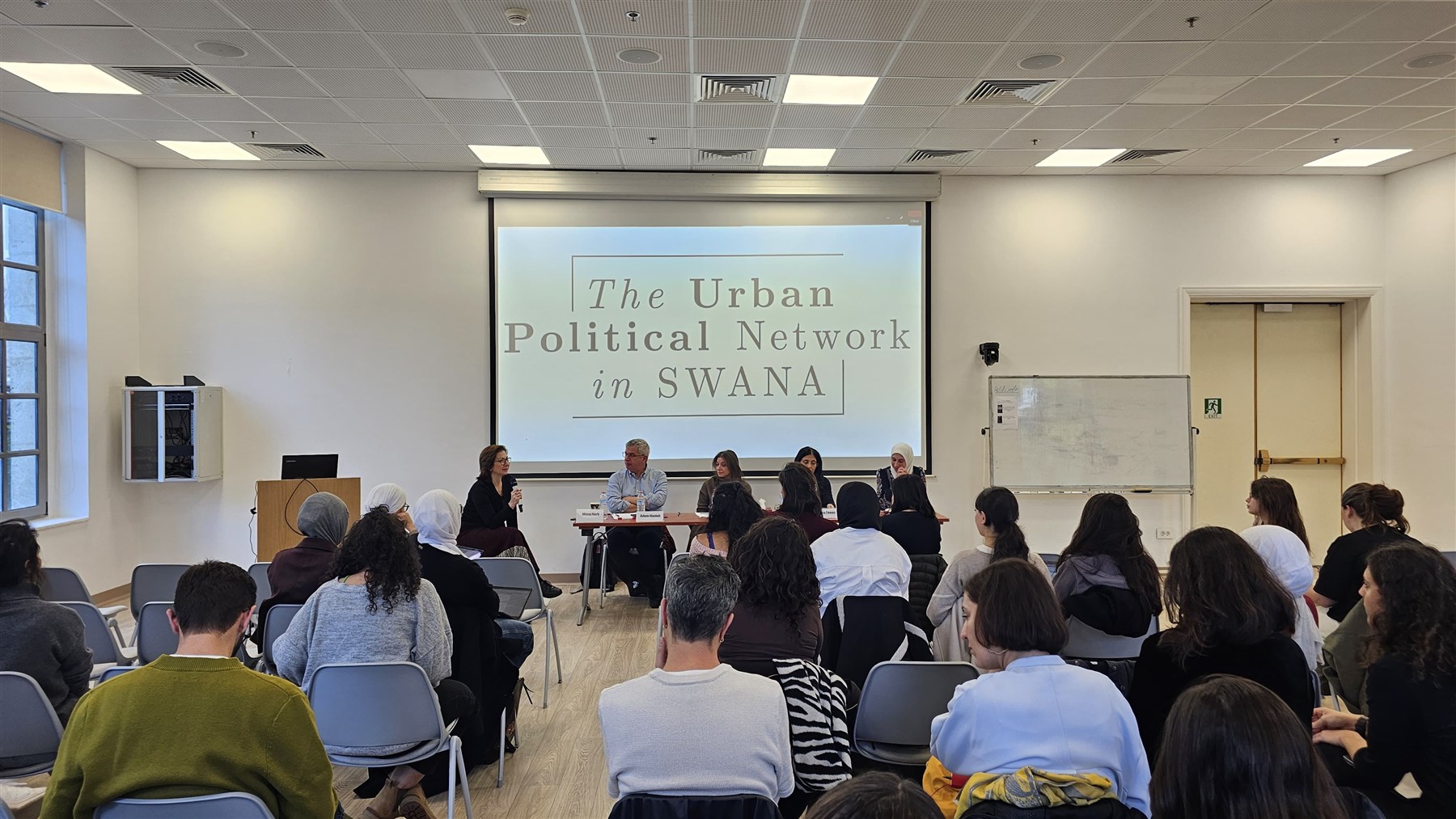
The Institute concluded with a public roundtable that brought together a group of distinguished scholars for a dialogue on knowledge production from and about the SWANA region: Adam Hanieh (Exeter/SOAS), Rima Majed (AUB), Mona Fawaz (AUB) and Sarah El-Kazaz (SOAS) reflected on recent research and methodologies, and discussed what it means to study urban politics in an age marked by war, settler colonialism, democratic backsliding, shifting global alliances and neoliberal transitions.
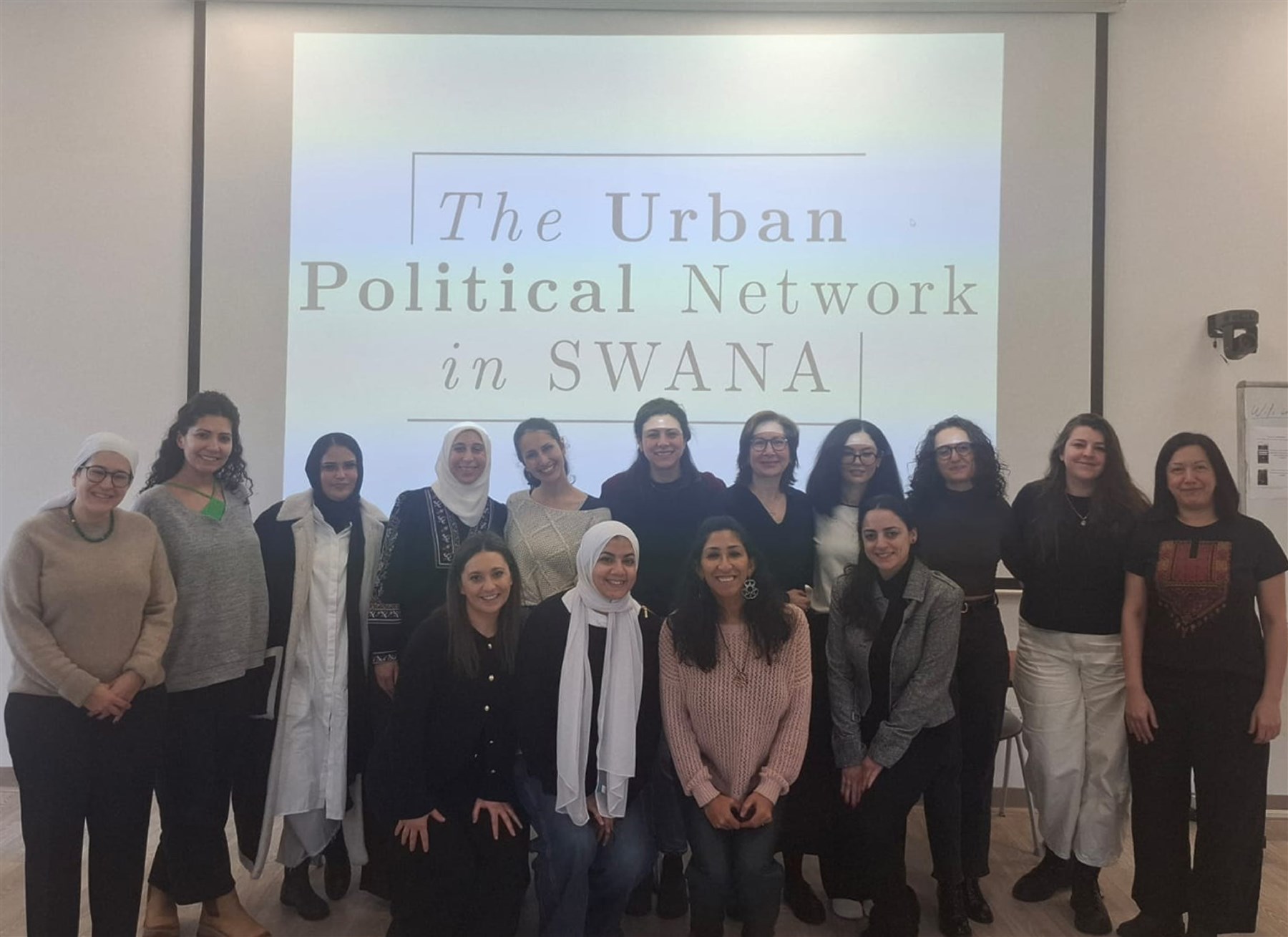
Participants to the Winter Institute included: Joelle Abou Issa; Salma Aboulhossein; Ronay Bakan; Lucy Garbett; Nihal Hafez; Dalia Ibrahim; Ansar Jasim; Safa Joudah; Alaa al-Mitwaly; Petra Samaha; and Riya al-Saneh.
The Institute concluded with a public roundtable that brought together a group of distinguished scholars for a dialogue on knowledge production from and about the SWANA region: Adam Hanieh (Exeter/SOAS), Rima Majed (AUB), Mona Fawaz (AUB) and Sarah El-Kazaz (SOAS) reflected on recent research and methodologies, and discussed what it means to study urban politics in an age marked by war, settler colonialism, democratic backsliding, shifting global alliances and neoliberal transitions.
Participants to the Winter Institute included: Joelle Abou Issa; Salma Aboulhossein; Ronay Bakan; Lucy Garbett; Nihal Hafez; Dalia Ibrahim; Ansar Jasim; Safa Joudah; Alaa al-Mitwaly; Petra Samaha; and Riya al-Saneh.